

Chinese Tourists Choose Southeast Asia and Korea Over Japan for Spring Festival
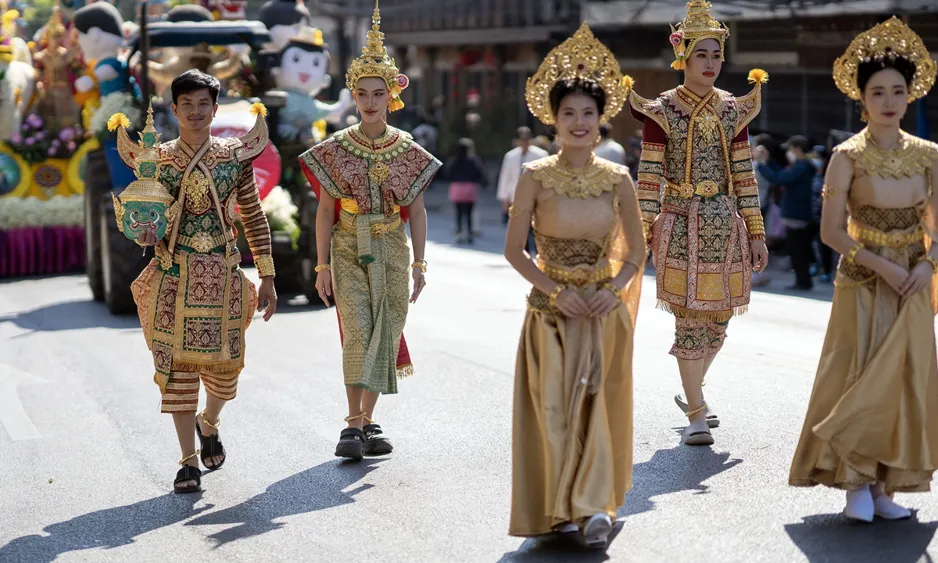
This year's Spring Festival saw a notable shift in the travel preferences of Chinese tourists, who increasingly favored Southeast Asia and South Korea over Japan, influenced by prevailing political concerns. Travel agencies reported that Japan experienced a drastic decline, losing nearly 50 percent of its Chinese visitor numbers during the holiday.
Specifically, outbound travel to Thailand surged this Spring Festival, recording at least a 20 percent increase in visitor arrivals compared to the previous year. This trend reflects a broader recovery in the Chinese tourism market, as noted by Wang He, CEO of Fly Elephant, an overseas travel agency specializing in regional tours.
Wang emphasized that the growth was evident in both the size of organized tour groups and at popular scenic sites, attributing the uptick to competitive airfares and a rebound in travel enthusiasm.
The shift in destination preference signals a meaningful change among Chinese tourists, with many who previously traveled to Japan opting for alternatives this year. Feedback from clients indicates a robust rise in bookings for Southeast Asian locales, particularly Thailand, alongside increasing interest in Singapore and Malaysia.
Reports indicate that around 250,000 Chinese travelers visited Japan during the Spring Festival, marking a significant decline compared to prior years. Concerns regarding potential political unrest were highlighted by travelers like Zhang Jianrong, who preferred to spend their holidays in more stable environments such as Busan, South Korea.
Multiple travel agencies have noted a corresponding decrease in bookings to Japan, while Southeast Asian destinations are emerging as the clear winners of the holiday travel season. Guan Jian, a spokesperson for GZL International Travel Service, reported unprecedented growth in departures to various Southeast Asian countries, notably Vietnam, Indonesia, and a combined tour of Singapore and Malaysia.
In stark contrast, travel bookings to Japan continued to diminish, with organized group tours virtually ceasing to operate according to industry reports. Observers attribute this shift to the relatively stable and welcoming atmosphere in competing regions, describing it as a mutual attraction between travelers and their chosen destinations.
Geographical proximity also plays a significant role in this travel trend, as Southeast Asian countries are often identified within a 'four-hour flight circle,' making them particularly appealing for short-haul travel, as stated by the travel platform Fliggy.
Interestingly, demand for mid- to long-haul destinations has seen remarkable growth, with countries like Oman, Kazakhstan, and South Africa experiencing over a doubling in outbound bookings during the Spring Festival compared to last year, according to Fliggy.
Meanwhile, travel platform Qunar reported that Chinese tourists visited nearly 1,000 cities globally between February 15 and 23, with preference leaning heavily towards Asian cities known for their proximity, lenient visa policies, and favorable climates, ideal for family vacations.
Data from Flight Master indicated that during the first week of the Spring Festival travel rush, flights on China-Japan routes fell by 1,292, reflecting a 49.2 percent year-on-year decline. Furthermore, a lack of Chinese tourists contributed to Japan's first year-on-year drop in foreign visitor numbers for January in four years, according to Xinhua News Agency.
According to statistics from the Japan National Tourism Organization, January's total foreign visitor count was reported to be below the previous year's figures for the first time since January 2022, emphasizing the growing concerns around political stability impacting tourism.
Read These Next

Strategic Impact of Hongxin Electronics' 2026 Employee Stock Plan
The commentary examines the recent approval of Hongxin Electronics' Employee Stock Ownership Plan (ESOP) for 2026, analyzing its implications for corporate governance, financial trends, and potential risks while considering historical precedents and stakeholder perspectives.

Nvidia's Impact on Mixed Dynamics in Asian Markets
Analysis of the mixed dynamics in Asian markets following declines in U.S. equities, focusing on the implications of Nvidia's stock performance and what it means for the semiconductor sector and broader tech trends.

Single Spring in Taicang Highlights Growth of China Germany Trade
Taicang illustrates growing China-Germany ties, with German firms thriving in China’s market through fair competition and investment.