

Opportunities and Competition in China Germany Relations

German Chancellor Friedrich Merz's inaugural visit to China takes place amidst a significant shift in global politics and industrial rivalry. The substantial German business delegation accompanying the Chancellor highlights that even as geopolitical dialogues become more nuanced, the economic partnership between China and Germany remains a foundational pillar for both nations' economies.
During discussions with Chancellor Merz, Chinese President Xi Jinping stressed the necessity of correctly navigating the balance between competition and cooperation. He advocated for enhanced strategic dialogue, fortified mutual trust, and efforts aimed at fostering meaningful advancements in the comprehensive strategic partnership between the two countries.
This perspective aptly depicts the current state of the bilateral relationship. Both China and Germany have evolved past their previous disparities in industrial development and are now prominent manufacturing nations with advanced technological expertise. As a result, their interactions are inherently characterized by both collaborative and competitive elements.
President Xi also remarked that heightened global uncertainty renders dialogue and trust even more crucial. He emphasized the importance of encouraging the reciprocal movement of talent, knowledge, and technology, while also underscoring the need to enhance synergies in development strategies, and maintain stable industrial and supply chains. These principles reflect an acknowledgment of the interconnected nature of innovation ecosystems, notwithstanding the pressures posed by geopolitical competition.
Premier Li Qiang reiterated during Chancellor Merz's visit that the core structure of China-Germany cooperation, defined by their industrial complementarity, remains unchanged at a structural level. Germany's international acclaim lies in its capabilities related to precision engineering, advanced manufacturing systems, and industrial standards, while China's strengths reside in its vast market scale, digital integration, supply chain coordination, and rapid technological commercialization.
The nature of this complementarity, however, has evolved. Historically, it represented a more distinct division within global value chains. In contrast, today's landscape sees China advancing its industrial base and German firms intensifying their innovation efforts, leading to competition emerging side-by-side with complementarity in sectors such as electric mobility and battery technology.
Far from indicating a fracture in their relationship, this convergence signifies a maturation phase between these two industrial powerhouses. Competition has intensified at the product level, particularly evident in China's burgeoning electric vehicle market, wherein domestic manufacturers have rapidly adapted through integrated supply chains and agile innovation cycles, pushing foreign brands, including renowned German carmakers, to face substantial competitive challenges.
In lieu of retreat, the response from the German industry has been constructive. Many firms are expanding their research and development facilities to not only tap into the Chinese market but also to bolster their global operations. Recently published findings from the Business Confidence Survey by the German Chamber of Commerce in China indicate that a growing number of German companies now view China as an innovation hub rather than merely a production site, necessitating technology partnerships and synchronized product development cycles to thrive amid intensifying competition.
Innovation is increasingly mutual. German firms, which long benefited from Chinese companies' learnings in engineering and manufacturing, are now keenly observing China's rapid advancements in digital integration and industrial scaling. President Xi's advocacy for the bilateral flow of knowledge encapsulates this shift, signalling a reciprocal technological exchange across a shared industrial landscape.
Chancellor Merz reaffirmed Germany's commitment to supporting its enterprises in enhancing investments within China, while equally welcoming increased Chinese investment in Germany, a move that fosters job creation and connectivity. This gesture sends an important signal that mutual investments reinforce economic resilience.
The scope for cooperation is substantial, especially given the ambitions outlined in China's 15th Five-Year Plan aimed at fostering innovation-driven growth and transitioning towards a greener economy. Opportunities abound in advanced machinery and environmental technologies, areas where German firms excel, paired with China's strengths in rapid commercialization and digital scalability.
As the China-Germany relationship progresses into a more intricate yet refined phase, the path forward lies in acknowledging both competition and complementarity while effectively managing their coexistence. This dynamic interplay, in which both nations harmonize domestic competitiveness with international collaboration, stands to bolster not only their growth trajectories but also the broader industrial landscapes globally.
Read These Next
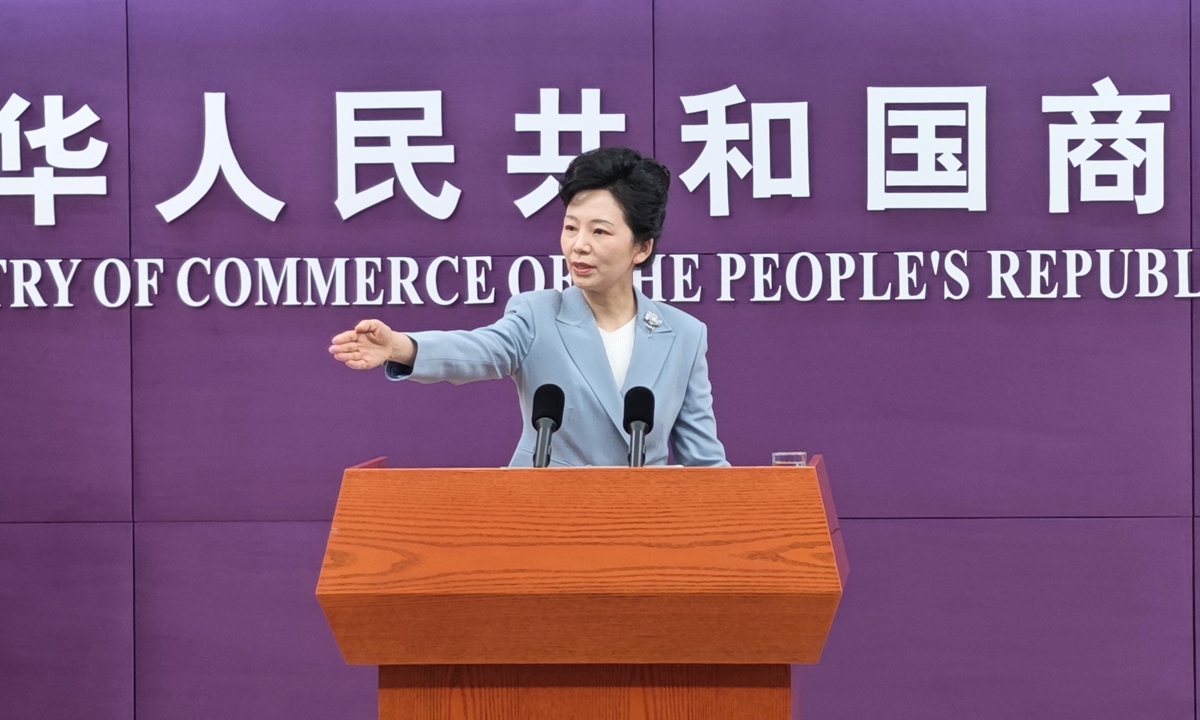
China Ready to Collaborate with US on Trade Discussions
China's Ministry of Commerce commits to dialogue with the U.S. in the sixth round of trade talks to enhance cooperation.
Cuban Deputy Foreign Minister Ready to Cooperate with US on Speedboat Incident
Cuba's Deputy Foreign Minister announces cooperation with the U.S. to investigate an American speedboat incident on the 26th.
Aerospace Change: Strategic Insights for Growth
Analysis of a company's strategic shift in aerospace and defense sectors, focusing on its 'Sea-Land-Air-Space' strategy, long-term growth initiatives, and associated financial risks.