

China to Launch Over 120 Remote-Sensing Satellites in 2025
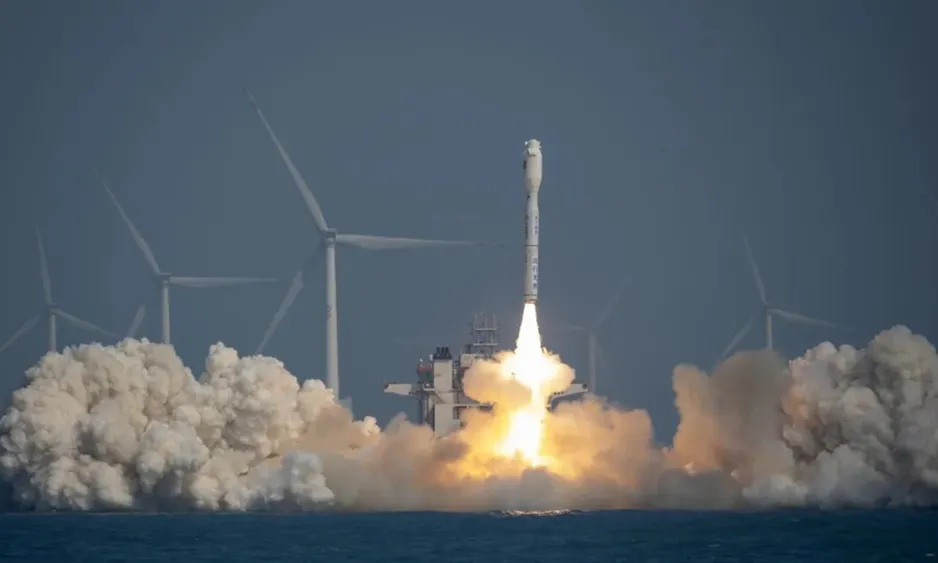
In a significant milestone for its aerospace ambitions, China launched over 120 remote-sensing satellites in 2025, solidifying its status as a global leader in satellite technology. This initiative has boosted the total number of civilian remote-sensing satellites in orbit to more than 640, firmly establishing China as the second-largest player in the field worldwide, according to a report released by Xinhua News Agency.
The rapid growth of China's commercial remote-sensing satellite sector has been marked by notable advancements in technology, constellation networking, and application expansion. These developments underscore the increased collaboration and clustering across China's commercial satellite industry chain, enhancing its capabilities in providing all-weather, continuous Earth observation.
Construction at China's first commercial space launch site located in Hainan Province advanced during the Spring Festival holidays. This site aims to meet an ambitious target of achieving 60 annual launches, reaffirming the country's commitment to enhancing its launch capacity.
Significant progress has been made at the launch site, with the primary structure of the second-phase project now complete. The next phase involves the installation and commissioning of new equipment, and by year-end, dual launch pads three and four are expected to commence operations. Together with the first-phase pads, they will enable a total of 60 launches annually.
Meanwhile, the Wenchang Spacecraft Launch Site in Hainan is evolving as a key hub for commercial aerospace. Over 700 aerospace companies have established operations in the city. Notably, one firm is in the process of building a rocket propulsion system test base, which is set to serve as a critical 'health check center' for rockets and is projected to be operational by June this year.
Wang Peng, an associate research fellow at the Beijing Academy of Social Sciences, observed that the new clustering of companies facilitates seamless integration of research and development with testing and launch operations. This integration enhances overall efficiency and reduces coordination costs, marking a new era for the commercial aerospace sector.
As this sector continues to flourish, space tourism has also begun to intertwine with its development. Since 2025, the Wenchang site has attracted over one million visitors eager to observe rocket launches, leading to fully booked accommodations during launch windows.
The Chinese government's focus on commercial aerospace has been reflected in consecutive work reports for 2024 and 2025, alongside proposals for the 15th Five-Year Plan emphasizing the need to bolster aerospace capabilities. A steady influx of supportive policies has ensured ongoing development momentum.
Wang highlighted a critical transition in the sector's growth model from being predominantly driven by national missions to one that is increasingly influenced by market demand. The engagement of commercial entities is accelerating breakthroughs in key areas such as rocket propulsion testing.
Looking forward, China's commercial satellite industry is entering a phase characterized by rapid deployment of satellite constellations and expansive applications. As commercial launch capabilities become fully utilized, large-scale satellite networking is expected to become standard practice, influencing various sectors from autonomous driving to mass communications.
In 2025, China executed 50 commercial space launches, representing 54 percent of its total space missions for the year. According to the China National Space Administration, a remarkable 311 commercial satellites were successfully placed into orbit, which accounted for 84 percent of all satellites launched by China in that year.
Read These Next

Mexico's Violence and Trade Impact
An analysis of how the violence caused by the assassination of a drug cartel leader is affecting cross-border trade flows, focusing on air freight, land transport, and ports. The economic significance of trade relations between the U.S. and Mexico is highlighted, as well as the broader impacts on market stability and investor confidence.
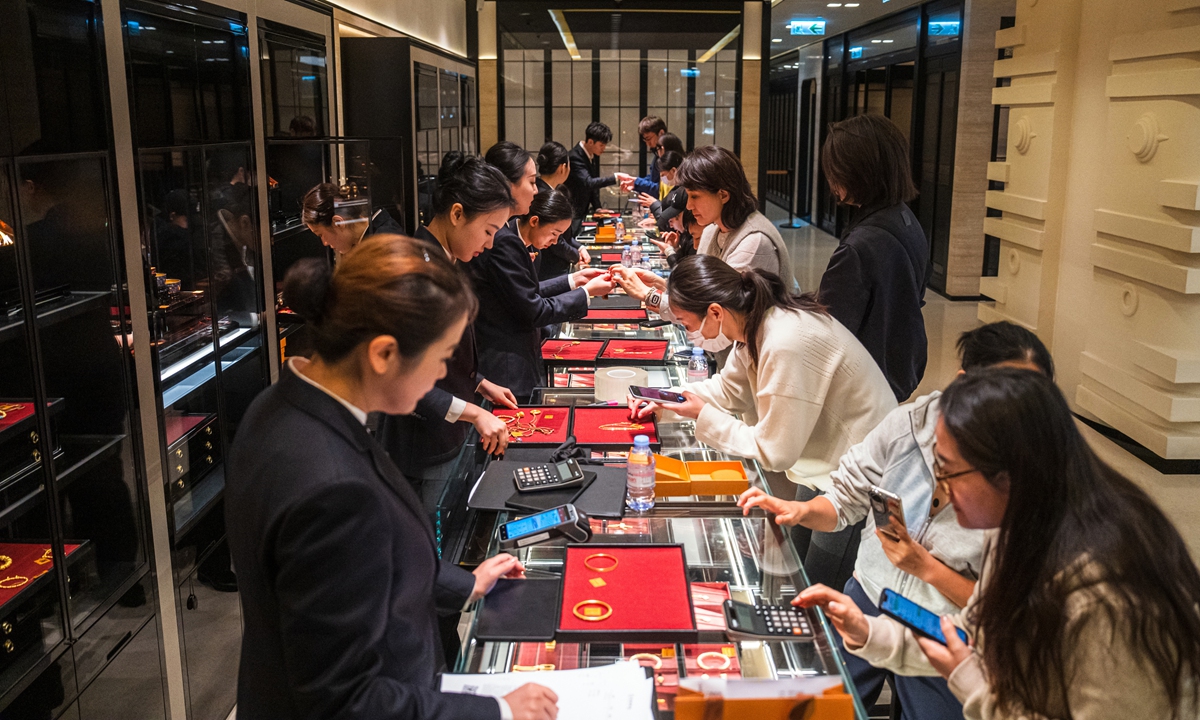
Chinese Gold Buying Spree During 9-Day Spring Festival Holiday
Chinese consumers increased gold purchases during the Spring Festival, driven by wedding traditions and gift-giving customs.

IBM Stock Plunges 12% on February 24 Largest Drop Since 2020
IBM's stock fell 12%, its biggest drop since 2020, raising concerns about its long-term prospects in tech and cloud services.