

Trump Pushes for 15% Global Tariff After Court Setback
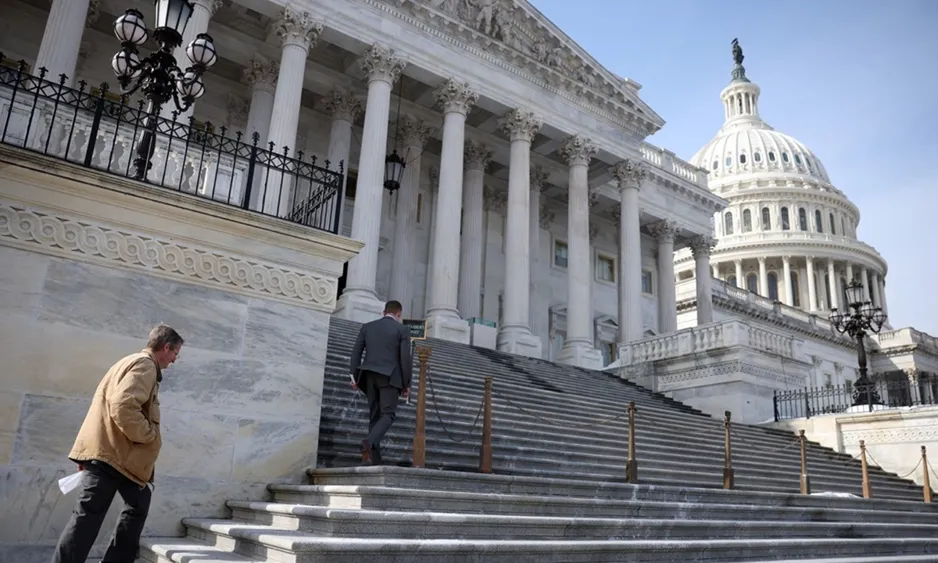
In a significant move reported by The New York Times, US President Donald Trump announced on Saturday that he would elevate his global tariff rate to 15 percent. This decision came shortly after the US Supreme Court ruled that the extensive tariffs implemented by the Trump administration under a national emergency law were illegal. Consequently, Trump stated he would issue an order to apply a 10 percent global tariff, replacing some of the emergency duties recently invalidated by the court.
Numerous media sources, including the Associated Press, characterized this recent tariff escalation as emblematic of Trump's erratic tariff strategy, a tool he often utilizes to influence global trade rules and assert pressure in international relations.
As the United States remains deeply connected to global trade and supply chains, the unpredictable tariff policies of the Trump administration have bred confusion and disrupted international commerce, which in turn may inflict harm on both its trading partners and the American economy, according to insights from a Chinese expert.
In a social media post, Trump emphasized his intention, stating, "I, as President of the United States of America, will be, effective immediately, raising the 10 percent Worldwide Tariff on Countries, many of which have been ‘ripping’ the US off for decades, without retribution (until I came along!), to the fully allowed, and legally tested, 15 percent level," as reported by Bloomberg.
Reports indicate that some White House staff members were taken by surprise by this sudden increase, as it took place less than a day after the president had announced his initial 10 percent tariff.
Trump’s attempt to reinforce these tariffs underscores the looming economic uncertainty. The legal authority he previously claimed under emergency powers is not as expansive, which may yield new legal hurdles for his administration's approach to tariffs.
According to the BBC, the proposed regulation will necessitate that American businesses pay a 15 percent tariff on the majority of imports into the United States, as outlined in Section 122 of the Trade Act of 1974.
Gao Lingyun, a researcher at the Chinese Academy of Social Sciences, commented that the current decisions regarding US tariffs appear arbitrary, with the administration wielding tariffs as a political instrument. He asserted that tariff policies should stem from thorough assessments rather than political considerations.
Gao noted that the newly declared blanket 15 percent tariff is a sudden shift in policy, the ramifications of which remain unquantified. He explained that if previously enacted reciprocal tariffs were nullified and then reapplied at a uniform rate, the overall tariff imposition would not be significantly different from pre-existing levels.
For certain nations, including the UK and Australia, Trump's new 15 percent tariff may exceed previous rates applied to their exports to the US. Conversely, countries like China, Vietnam, India, and Brazil will find the new tariff notably lower.
German Chancellor Friedrich Merz conveyed on Saturday that he plans to travel to Washington for discussions with a unified European front following the Supreme Court's rejection of Trump's tariff initiatives. He cautioned against the potential harm of fluctuating tariffs, expressing that they adversely affect all involved.
In a related commentary, Allie Renison, a former UK government trade advisor, stated that while it may seem like a favorable day for free trade, the reality is that the trade landscape has grown increasingly complex under the Trump administration's approach.
Read These Next

US Trade Policy Uncertainty and Its Impact on India
This commentary analyzes the recent changes in U.S. tariff policy as it affects trade negotiations with India, emphasizing the implications of the Supreme Court's ruling and the subsequent postponement of a planned trade mission.

Suzhou Embraces AI to Evolve Into an AI+ City
Suzhou is evolving into an 'AI+' hub with 2,500 tech enterprises, driving an intelligent economy and smarter city solutions.
Strong 7.0 Magnitude Earthquake Hits North Kalimantan Indonesia
A 7.0 magnitude earthquake hit Tanah Tidung, Indonesia, on February 23, prompting emergency responses and public vigilance.