

Spring Festival Reveals China’s Booming New Energy Vehicle Market
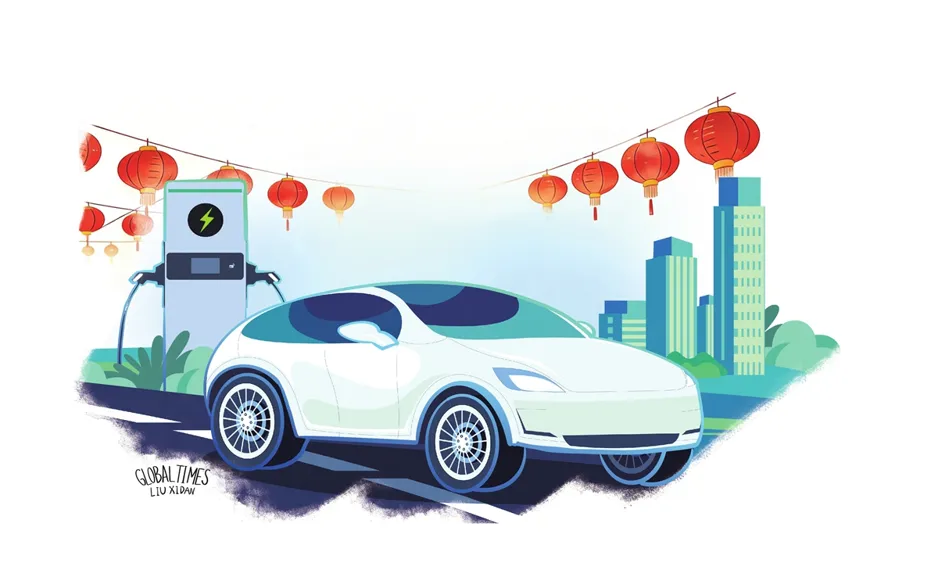
The recent Spring Festival travel rush has illuminated the remarkable growth of China's New Energy Vehicle (NEV) market, highlighted by an impressive estimate of 380 million trips. This surge in travel not only reflects a growing consumer inclination toward NEVs but also enhances confidence in the supporting infrastructure, specifically charging stations.
During this holiday period, public scrutiny has intensified regarding the reliability of NEVs for long-distance travel. The concentrated travel patterns during the festival put significant pressure on both the vehicles and the national charging grid, raising essential concerns about daily driving ranges, the proximity of charging stations along major routes, and potential wait times during peak hours.
As these dynamics unfolded, it became evident how NEVs respond to widespread market adoption. The substantial number of anticipated trips, totaling 380 million, signifies not only consumer trust in the cars themselves but also in the robustness of the charging infrastructure. This level of adoption suggests that consumers increasingly view NEVs as a viable option for diverse journey types, even during the busiest travel seasons.
To understand this consumer confidence better, it is crucial to evaluate the development of NEV infrastructure in three key dimensions, starting with scale. By December 2025, China was reported to have established a vast network comprising over 20.09 million charging points, including approximately 4.72 million public chargers alongside 15.37 million private charging units, making it the world's largest electric vehicle charging network.
The second crucial dimension pertains to the coverage of charging facilities. Remarkably, 19 provinces across China have achieved complete rural coverage. Moreover, national highway service areas are now equipped with around 71,500 charging stations, ensuring that over 98 percent of these areas are accessible, substantially mitigating charging anxiety and facilitating the travel plans of NEV owners.
Convenience serves as the third dimension of this infrastructure evolution. Unlike the early days of isolated brand chargers, many public charging stations now allow cross-brand usage, enabling drivers to access multiple providers through a single app or QR code. Furthermore, advancements in data-driven technology have improved the user experience, equipping mobile applications with real-time data regarding charger availability and allowing for seamless reservations and payments.
Looking to the future, innovations such as vehicle-to-grid technology are being piloted in various cities, allowing NEVs to feed electricity back into the grid. These initiatives underscore China's strategic shift toward integrating infrastructure development with technological advancements to meet the growing demands of the rapidly expanding NEV sector.
In addition to the vehicles themselves, the robustness of NEV infrastructure is emerging as a pivotal driving force behind market growth. Accessible and reliable charging networks are essential for alleviating range anxiety, thus reinforcing consumer confidence and establishing NEVs as a practical choice for longer trips.
The increasing market growth surrounding NEVs reflects a broader global emphasis on green and electric mobility. A higher scale of NEV usage generates positive network effects; more vehicles justify the increase in charging facilities, which in turn promotes wider adoption. This trend underscores that the success of NEVs is as reliant on enabling conditions as it is on vehicle technology.
While debates within the international arena often center on competition for market share, it is equally critical to recognize how infrastructure can redefine the boundaries of the sector. Investing in charging networks and fostering interoperability not only supports adoption but also strengthens the long-term viability of the marketplace.
In 2025, China produced 16.626 million NEVs and sold 16.49 million, solidifying its position as the largest NEV market globally for the eleventh consecutive year. The significance of NEVs during the Spring Festival travel rush serves as compelling evidence of how the Chinese market has successfully fostered growth through a synergistic relationship among infrastructure development, consumer confidence, and widespread market adoption.
Read These Next

US Military Strikes Drug Trafficking Vessel in East Pacific
U.S. Southern Command conducted an operation on a vessel in the East Pacific, raising debates on maritime law and drug trafficking.

Peru's Presidential Office Confirms No Plans for Pardons
Peru's presidential palace confirms no plans for pardons, emphasizing commitment to rule of law and social trust.

Economic Impact of Increasing IRS Tax Refunds
Analysis of the implications of increased IRS tax refunds for consumption, retail, and the automotive sectors amid broader economic trends.