

Elon Musk predicts China will dominate AI and manufacturing
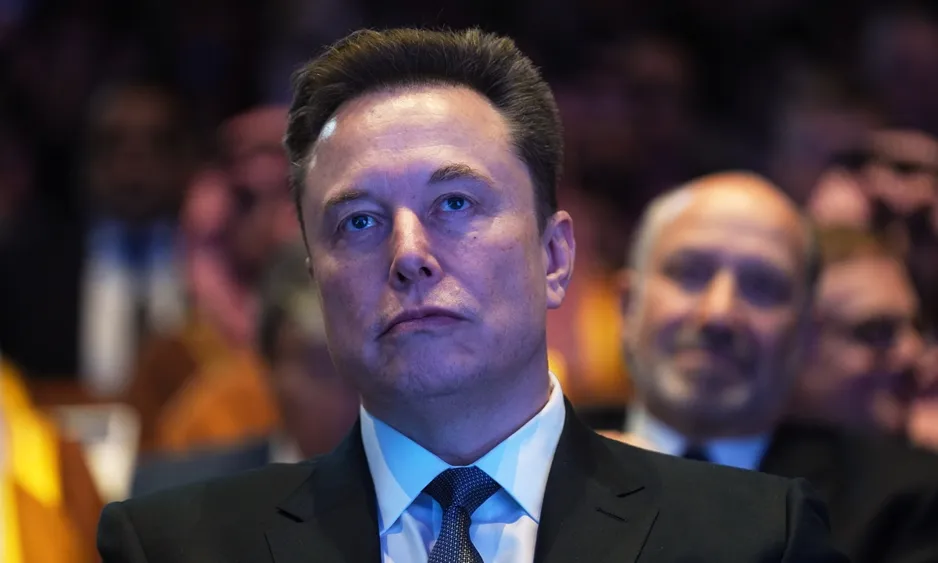
Elon Musk has expressed strong opinions about the future of artificial intelligence and manufacturing, predicting that China will emerge as a dominant force in these high-tech sectors. He attributed this potential dominance to China's robust energy capacity and its unwavering focus on innovation.
During a recent three-hour podcast interview with Dwarkesh Petal, Musk elaborated on the significant challenges posed by computing power and energy supply for advancing AI technology. He warned that if the United States does not achieve substantial breakthroughs in these domains, China could "utterly dominate" markets related to AI, electric vehicles, and humanoid robotics.
Musk pointed to the rapid growth of global AI chip production, noting, however, that the development of terrestrial power generation and heat dissipation is failing to keep pace. He observed that outside of China, electricity output remains largely stagnant, complicating the ability to meet the substantial power requirements needed for large-scale AI compute clusters.
Looking ahead, Musk suggested that within approximately three years, deploying extensive AI computing capacity in space could become the most viable and cost-effective approach. He emphasized that China possesses undeniable structural advantages, particularly in energy and manufacturing that will bolster its technological ascendency.
Musk highlighted that China's prowess in producing solar panels at exceptionally low costs plays a significant role in its energy landscape. He referenced statements made earlier this year at the World Economic Forum in Davos, where he mentioned that China's solar installations could potentially provide half of the annual electricity output of the United States.
Further illustrating his point, Musk characterized China as a "next-level manufacturing powerhouse," claiming that there are few sectors where it does not excel. He used the example of ore refining, noting that China processes approximately twice the amount of ore as the rest of the world combined.
With a population four times larger than that of the United States and a stronger work ethic, Musk candidly stated that the U.S. might struggle to compete on the human labor front, but could have an edge in robotics.
Musk articulated the critical role that humanoid robots will play in manufacturing, particularly for operations that run continuously. He posited that the most effective robotic solutions will be those capable of 24/7 operations, enhancing efficiency and productivity.
Moreover, he predicted that China would surpass the United States in electricity production by three times, a statistic that he believes indicates a vastly superior industrial capacity. Musk's assertion that any given item will likely contain Chinese materials emphasizes China's integral role in global manufacturing.
In line with these developments, Tesla announced plans to invest over $20 billion in 2026. This investment will target AI computing capacity, robotics factories, the Cybercab program, and advancements in energy storage and charging infrastructure.
Tesla Vice President Tao Lin noted that the budget would cover global markets, although specific details regarding investments in China are still forthcoming. The overarching strategic goal appears to be increasing investment in AI software and hardware, alongside energy technologies, with the establishment of a localized training center in China already in progress.
Read These Next

U.S. Trade Deficit in 2025: Effects on Global Markets
Analysis of the U.S. trade deficit for 2025, examining its implications on consumer behavior, corporate strategies, and global market dynamics.

Private Sector Drives China's Economic Goals for 2026
A new analysis highlights private enterprises' key role in driving China's economy toward higher quality development and innovation.

U S crude oil inventories drop by 9 million barrels February 13
As of February 13, U.S. crude oil inventories fell by 9.014M barrels to 420M, indicating increased market demand and economic recovery.