

Canada Launches New Electric Vehicle Strategy in Partnership with China
Canada has unveiled a new electric vehicle strategy that pivots towards enhancing cooperation with China, marking a shift in the country's automotive policy. This initiative is aimed at bolstering Canada's automotive industry through bilateral cooperation, contrasting with the previous government’s approach, which focused on closely aligning with the United States.
Experts from China have noted that this policy shift towards fostering win-win economic and trade relations with China signals a return to mutually beneficial cooperation for Canada. They assert that this transition is expected to serve as a model for other nations, especially those allied with the U.S. Given China's leading position in the electric vehicle sector, such a partnership is seen as vital for enhancing the competitiveness of Canada's automotive market.
The Canadian government's strategy includes the launch of a five-year, 2.3 billion Canadian dollar 'EV Affordability Program.' Announced via the prime minister's official website, this program aims to incentivize consumers with financial assistance of up to 5,000 Canadian dollars for battery-electric and fuel cell vehicles, while plug-in hybrids are eligible for incentives of up to 2,500 Canadian dollars.
In further developments, Canadian officials have established a strategic partnership with China, positioning the latter as a global powerhouse in electric vehicle production. This strategic agreement is designed to diversify trade and stimulate investments in the Canadian automotive sector, with expectations of attracting new Chinese joint ventures and facilitating specific volumes of EV imports from China into Canada.
The new policy is also a response to economic pressures from the U.S., which has recently intensified its protectionist measures against Canadian goods. According to the Canadian government, this initiative aims not only to transform the national economy but to reduce dependency on a singular trading partner. Recent relationships have sour due to U.S. economic aggressions, leading Canadian officials to articulate a more autonomous policy direction.
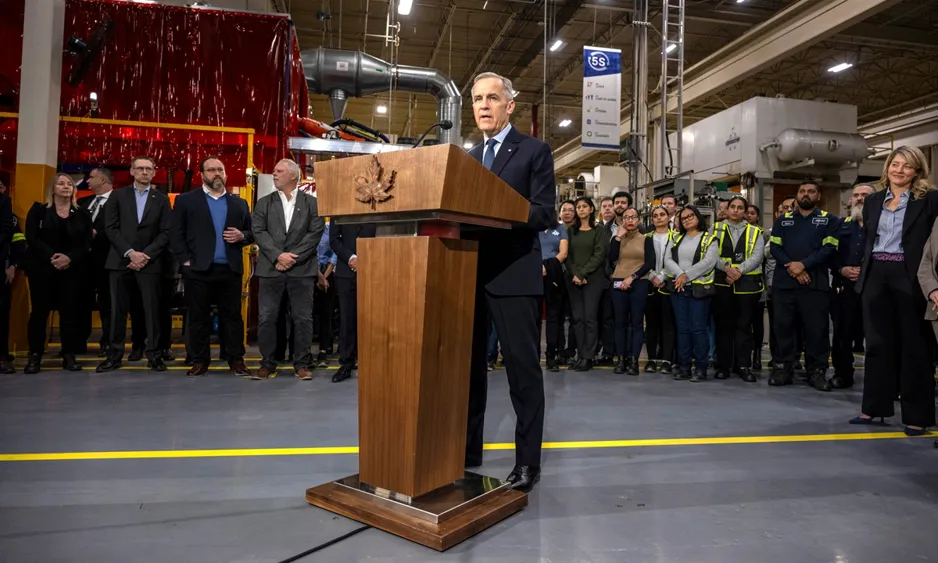
Mark Carney highlighted that Canada must become self-sufficient amid increasing external pressures, emphasizing the importance of focusing on national interests. On a recent visit to an auto parts factory near Toronto, he reiterated the need for Canada to develop its own capabilities beyond the influences of larger powers.
Internationally, the decision to collaborate with China is also seen as a strategic maneuver to mitigate the reliance on the U.S. Amidst pressures for heightened domestic vehicle production from Washington, these initiatives represent Canada's efforts to recalibrate its trade dynamics.
Analysts, including Bao Jianyun from Renmin University, pointed out that this new strategic approach is pragmatic and conducive to fostering a cooperative spirit in the EV sector. The shift from the preceding Trudeau administration to the Carney administration highlights a resurgence in Canada's approach to balancing its trade relationships.
Carney's January visit to China marked a significant moment, being the first by a Canadian Prime Minister since 2017, during which he praised the country's competitive stance in electric vehicle manufacturing and announced tariff reductions, showcasing a notable shift in policy.
In a significant aspect of the new agreement, Canada will permit an annual quota of 49,000 Chinese electric vehicles into its markets at a preferential tariff rate, thus exempting them from the 100 percent tariff that was previously announced for 2024.
Public sentiment reflects a favorable view, with a recent poll indicating strong support among Canadians for the sale of Chinese electric vehicles domestically. This aligns with experts' views that enhanced cooperation with China is both a pragmatic response to global changes and an opportunity for economic growth.
With China leading the global electric vehicle market, the potential for cooperative advantages is substantial. Experts argue that deepening ties with China will not only provide Canadians with access to advanced, cost-effective vehicles but also stimulate local job creation and boost tax revenues, thereby strengthening Canada's overall industrial framework.
Read These Next

Japan's Bond and Currency Sell-off Signals Economic Uncertainty
Japan faces a bond and currency sell-off amid elections, highlighting economic uncertainty and risks to fiscal discipline.

Prime Minister Visits US for Talks on Iran Nuclear Negotiations
Netanyahu plans to meet Trump soon to discuss Iran's nuclear program and enhance regional security and stability.

Milan Winter Olympics Protests End with Violent Clash
Protesters in Milan, host of the Winter Olympics, ended their demonstration after throwing Molotov cocktails at police.