

New International Land-Sea Trade Corridor Gets Financial Policy Boost
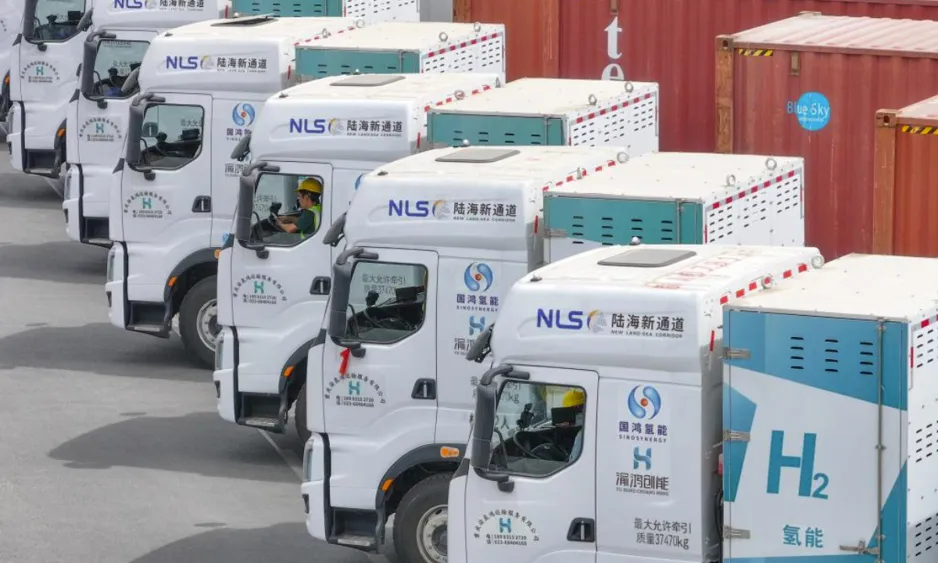
China's New International Land-Sea Trade Corridor is set to receive significant financial backing, aimed at enhancing trade efficiency and driving economic growth. This development underscores China's intention to progressively open its economy to facilitate a more intricate dual circulation strategy, as highlighted by a deputy governor of the People's Bank of China (PBC).
On Wednesday, a collaborative initiative was announced involving the People's Bank of China, the National Development and Reform Commission, and six other ministries, which introduced 21 targeted support measures. These measures are designed to leverage financing and settlement mechanisms to support the growth and high-quality development of the New International Land-Sea Trade Corridor.
During a press conference on Thursday, Lu Lei, deputy governor of the PBC, indicated that the central bank will work closely with relevant departments to implement these measures effectively. The focus will be on enhancing financial services and improving the overall quality of financial assistance, thereby fostering a coordinated development framework between inland and coastal regions in China.
Lu highlighted the significance of the newly released document, suggesting it will facilitate a seamless dual circulation that integrates domestic and international markets. He noted that increasing financial institutional openness in central and western China would create favorable conditions for quality economic and trade development along the corridor.
Trade through this corridor reached 1.35 trillion yuan, equivalent to about 192.08 billion US dollars, from January to October, reflecting a remarkable 17.9 percent increase year-on-year. Moreover, Chongqing Municipality, a pivotal hub in this trade network, reported an astonishing 1.7-fold increase in trade, amounting to 48.96 billion yuan in the first 11 months, according to the city government.
The introduction of these support measures is part of China's broader strategic move toward advanced and institutionalized economic opening, complementing recent initiatives such as the special customs operations in Hainan Free Trade Port.
The document serves as a comprehensive blueprint for advancing infrastructure and financial opening in the western regions, outlining a support system to address financing challenges, reduce costs, simplify settlement procedures, and enhance cross-border financial services related to the corridor, as explained by Wan Zhe, a professor at Beijing Normal University.
Specifically, targeted investments in infrastructure, industrial development, and cross-border yuan settlement will accelerate progress across various sectors, contributing to the overall enhancement of the trade corridor.
Lu also pointed out the crucial need for dismantling regional barriers and promoting better interconnectivity between finance and the real economy across different provinces. This coordination is essential for fostering cross-border financial cooperation among corridor nations and ASEAN countries.
In conclusion, these coordinated efforts aim to create a new development paradigm characterized by a foundational domestic circulation that is mutually supportive of international circulation, thus bolstering the effectiveness and reach of the New International Land-Sea Trade Corridor.
Connecting the Silk Road Economic Belt with the 21st Century Maritime Silk Road, this corridor plays a vital role in China's regional development strategy, having evolved since its pilot initiative in 2017 into a critical trade route linking China with ASEAN markets and beyond.
Read These Next

AI and Climate Change: Navigating Europe's Critical Crossroads
Analysis of Europe's dilemma between advancing AI technology and adhering to climate goals amidst growing energy demands and regulatory challenges.

Hubei Lab Achieves World Record with 800 km/h Maglev Breakthrough
Hubei researchers set a world record by accelerating a maglev rail model to 800 km/h, showcasing China's transport advancements.

Strong 66 Magnitude Earthquake Hits Waters off Taiwan
A magnitude 6.6 earthquake hit off Yilan County, Taiwan, on Dec 27, 2025, raising alerts and discussions on disaster preparedness.