

China's Financing for Developing Nations Aligns with International Practices, Says FM

During a recent press briefing, a reporter highlighted a report suggesting that China might leverage developing nations' debts for geopolitical ends. The inquiry specifically addressed how China's transition from being a prominent lender to a major debt collector could affect its relationships with these developing nations.
Responding to the question, Mao Ning, the spokesperson for the Foreign Ministry, expressed uncertainty regarding the report's foundations. She noted that a minority of countries are propagating the narrative that China is to blame for the debt issues faced by these nations, while overlooking the significant roles played by multilateral financial institutions and commercial creditors from developed nations. "Lies cannot cover truth, and people can tell right from wrong," Mao emphasized.
The report in question, published on Monday, contended that developing nations are experiencing escalating debt repayments and rising interest obligations to China, as loans extended under the Belt and Road Initiative during the 2010s reach maturity.
Chinese experts have dismissed the findings of the report as politically charged and biased, asserting that China's international financing adheres to principles of equality and cooperative development. They maintain that the intent of these loans is to assist in fostering self-sustaining growth in developing countries rather than creating dependency.
Yang Baorong, the director of African Studies at the Institute of West-Asian and African Studies under the Chinese Academy of Social Sciences, articulated to the Global Times that China's financing strategy prioritizes infrastructure and capacity-building to promote self-reliance, contrasting it sharply with dependency-inducing practices.
The report from the Australian think-tank also pointed to a withdrawal of support from an increasingly isolationist United States and a distracted Europe, which are reportedly scaling down their aid to developing nations.
Yang further explained that China's lending model diverges from traditional Western aid systems by focusing on long-term developmental goals rather than short-term gains. His assertion highlights that the objective is to empower nations towards self-reliance instead of merely addressing immediate fiscal challenges.
Moreover, he warned that dollar-denominated debts amplify risks for developing countries, particularly many African nations, due to the inherent volatility in currency exchange rates.
In conjunction, Song Wei, a professor at the School of International Relations and Diplomacy at Beijing Foreign Studies University, remarked that China is committed to seeking realistic, development-centered solutions when challenges arise in funded projects, countering claims from the report that suggest otherwise.
Read These Next

Goldman Sachs Launches New ETF for Downside Protection
Goldman Sachs' strategic acquisition of Innovator Capital Management signals a bold move into ETFs aimed at market downturn protection, tapping into growing investor demand for safety amid volatility. This commentary explores the implications and trends arising from their strategy.
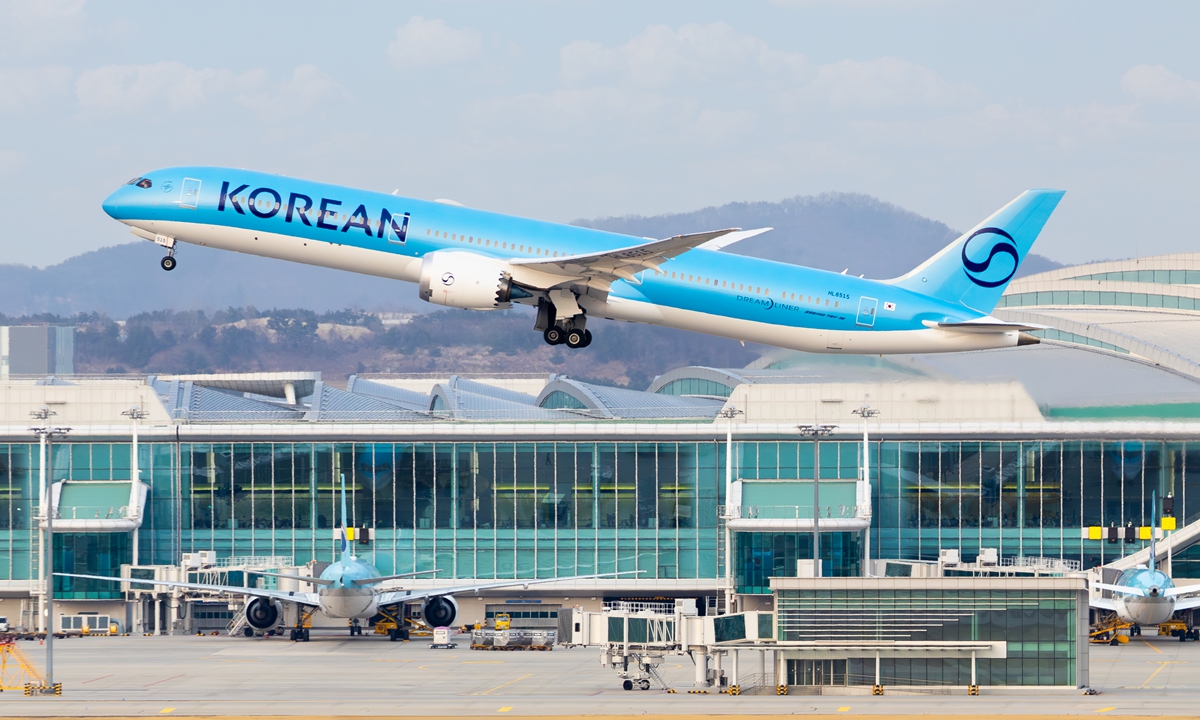
Korean Air Sees Travel Surge to China with Shanghai Top Destination
Korean Air sees a rise in passengers to China, with Shanghai being popular due to China's visa exemption for South Koreans.

Fire at Wangxiangu Scenic Area in Jiangxi Shangrao Under Control
On Dec 13, 2025, a fire at Wangxiangu's scenic area in Jiangxi was controlled in 2 hours with no casualties; cause under investigation.